Catholic Charities Maine Home  |  About Us |  Contact Us

Refugee & Immigration Services

Refugee & Immigration Services

Resettlement Services

Elder Services

Interpreting Services

Volunteer Opportunities

Employing Refugees

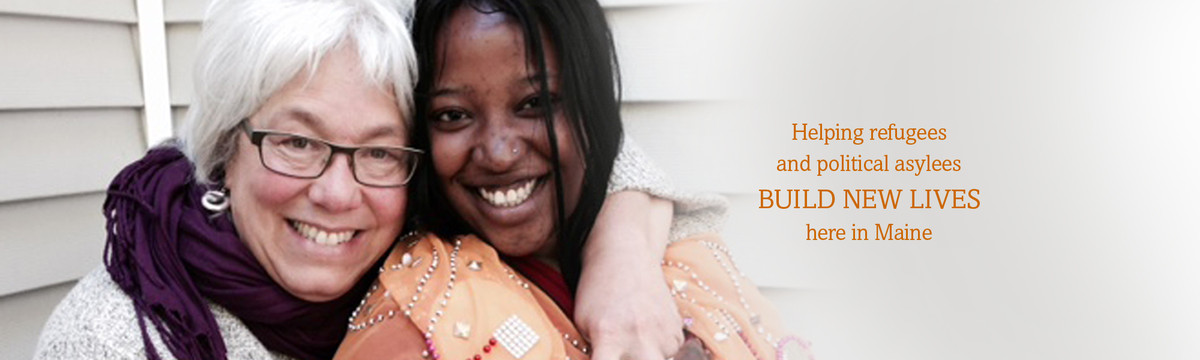
Since 1975, Catholic Charities Maine Refugee and Immigration Services has been the primary provider of resettlement services to refugees in Maine. Catholic Charities Maine resettles refugees of all races, religions and ethnicities. More than 5,000 newcomers from two dozen countries of Southeast Asia, Africa, the Near East, Eastern Europe, Cuba, and the former Soviet Republics have been assisted by these services to start new lives in Maine.

Definition of a Refugee

1951 Convention and 1967 Protocol Relating to the Status of Refugees:
A refugee is a person who has been forced to leave his/her native country because of a well-founded fear of persecution for reasons of race, religion, nationality or political opinion, or who being outside his/her native country cannot return due to a well-founded fear of persecution for reasons of race, religion, nationality or political opinion.

Our Services to Refugees

Catholic Charities Maine Refugee and Immigration Services resettles all persons classified as refugees by the federal government regardless of race, color, creed, or national origin. The diversity of the refugees resettled in Maine closely reflects the quotas set annually by the President. Recruitment, training and support of volunteers

Catholic Charities Maine is the only agency in Maine authorized to administer the federal program that resettles refugees in this country. Realizing that many of these clients arrive in Maine with few possessions, and often have suffered trauma and loss of family members, our Refugee and Immigration staff works with them to access housing, English skills, jobs, and medical and mental health services that will allow them to begin a new life here and become part of the community in which they live.
aaaaaaaaaaaaaaaa

U.S. Refugee Resettlement
aaa
In FY09, the US government agreed that a maximum of 80,000 refugees could be considered for resettlement in the United States, based on humanitarian concerns or national interest.
aaa

74,652 refugees were resettled in the US in FY09. Admission levels have been low since 9/11; however there was a significant increase in arrivals in FY09.
aaa

Admission levels for FY2010 are again set at 80,000 and the various populations in need worldwide were allocated as follows:

o Near East/South Asia . . . . . ... 35,000

o East Asia . . . . . . . . . . . . . . . 17,000

o Africa . . . . . . . . . . . . . . . . . .15,500

o Latin America/Caribbean. . . .......5,000

o Europe/Central Asia . . . . . . . ....2,500

o Unallocated Reserve. . . . ..........5,000

(often this category used in times of a humanitarian crises or natural disaster like Hurricane Katrina).
aaa

Refugees being resettled in the US are thoroughly screened by the government prior to being accepted for resettlement (including health and security checks)

How Refugees Arrive and What Services they Qualify for:
aaa

• When a primary refugee arrives in Maine, RIS case managers will receive notice of their arrival from the VOLAG in Washington, DC, up to two weeks prior to their arrival. RIS case managers will find and prepare their housing, furnish their homes with donated furniture, buy food for them that is culturally appropriate to the arriving refugee, greet them at the airport, assist them in receiving health care, finding employment, enrolling children in schools, referring adults in the family to English language learning programs, and assist them in life skills and cultural orientations.
aaa

• When a secondary migrant arrives in Maine, RIS case managers in Lewiston and the City of Portland Refugee Services in Portland (a subcontractor), can provide case management assistance, employment assistance, school enrollment, ESL referral, basic cultural and life skills orientations, and referral to providers for further services and needs. Unlike primary refugees, however, there is no way to determine when a secondary migrant will arrive in a new city and choose to rebuild their life there, so there is little to no preparation time to this case management. It is important to note that refugees, like US citizens, have the freedom to move wherever and whenever they would like.

Who are the New Mainers?
aaa

RIS has assisted over 14,000 people since its resettlement program began. By the close of the 2009 fiscal year, RIS had resettled approximately 260 primary refugees and assisted more than 600 secondary migrants (with help from subcontracting partners).
aaa

•Primary Refugees: A primary refugee is a refugee who arrives directly from a country of asylum (refugee camp) to Maine. RIS considers primary refugees to be “newly arrived” for up to one year after their arrival in Maine. All primary refugees are entitled to Reception and Placement funds from the federal government to assist in their initial resettlement.
aaa

•Secondary Migrants: A person who entered the US as a refugee and was resettled in one state, but then chose to move to another state. For example, a refugee who was resettled in Chicago, IL, but then chose to move himself to Portland, Maine, would be considered a secondary migrant when they arrive in Maine. Approximately 40-60% of New Mainers are Secondary Migrants and rely on a combination of State and City assistance. Secondary migrants do not receive resettlement funds again when they move to new cities. Refugee resettlement funds are given only at the initial resettlement site.


Locations

Portland
250 Anderson Street
Portland , ME 04101
207.879.1130
207.871.7465 Fax

Lewiston
Lewiston City Hall
27 Pine Street
Lewiston, ME 04240
207.344.6615
207.344.6617 Fax

RISinfo@ccmaine.org